
How to Get Microfinance Licence in India – RBI Process, Capital & Compliance Guide (2026)
Starting a microfinance business in India can be a highly profitable and socially impactful venture. With financial inclusion becoming a priority for the Reserve Bank of India (RBI), microfinance institutions (MFIs) play a crucial role in lending to low-income groups, rural borrowers, and small entrepreneurs.
If you are planning to apply for a microfinance licence in India, this complete guide explains the process, eligibility, capital requirement, documentation, and RBI compliance.
What is a Microfinance Company in India?
A microfinance company in India generally operates as a type of NBFC (Non-Banking Financial Company) registered with the Reserve Bank of India (RBI).
These institutions provide:
- Small ticket loans
- Group lending
- Rural financing
- Women entrepreneur financing
- Financial inclusion services
Most microfinance companies operate as:
- NBFC-MFI (Non-Banking Financial Company – Micro Finance Institution)
Types of Microfinance Models in India
There are mainly three structures:
- NBFC-MFI (Registered with RBI)
- Section 8 Microfinance Company
- Society / Trust Based MFI
However, if you want to operate at scale and lend legally across India, RBI registration as an NBFC is mandatory.
Capital Requirement for Microfinance Licence in India
To obtain an NBFC licence from RBI for microfinance activities:
- Minimum Net Owned Fund (NOF): ₹10 Crore
(₹5 Crore for North Eastern States)
The capital must be:
- Fully paid-up equity
- Free from encumbrances
- Properly sourced with documented trail
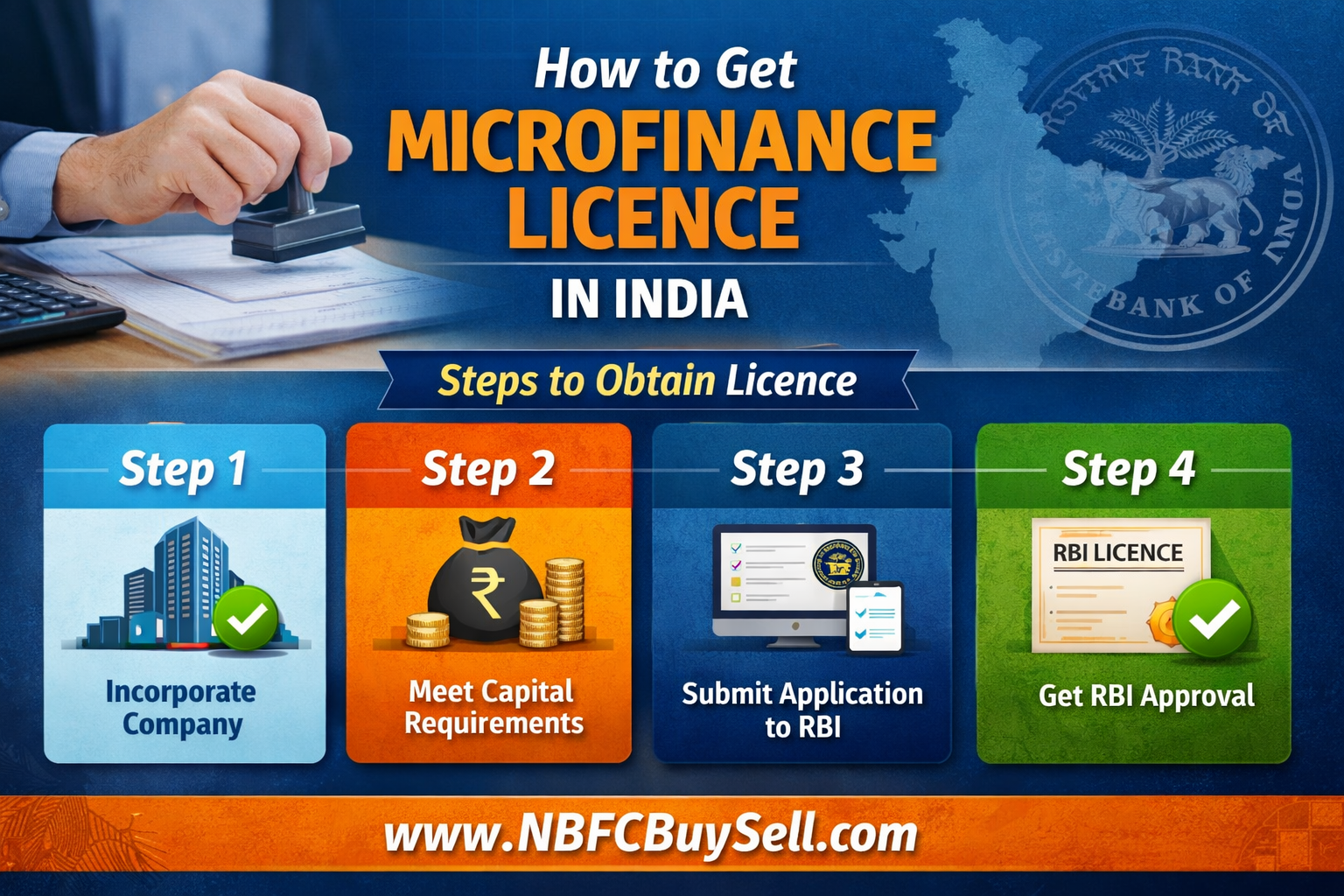
Step-by-Step Process to Get Microfinance Licence in India
Step 1: Incorporate a Private Limited Company
First, incorporate a Private Limited Company under the Companies Act, 2013.
The company must have:
- Financial services as main object clause
- Proper board structure
Clean director background
Step 2: Arrange Minimum Capital
Bring in required capital and deposit it in company’s bank account.
Obtain:
- CA Certificate for Net Owned Fund
Banker’s report
Step 3: Prepare Documentation for RBI
Key documents include:
- Detailed business plan
- 5-year financial projections
- Director KYC
- Credit reports
- Net worth certificates
- Board resolutions
RBI carefully examines promoter background and source of funds.
Step 4: Apply Through RBI COSMOS Portal
Application is submitted online via RBI’s portal.
After submission:
- Physical documents must be sent to RBI regional office
- RBI conducts background verification
- Fit & Proper criteria check
Step 5: RBI Scrutiny & ApprovalRBI may:
- Seek clarifications
- Conduct personal hearing
- Verify business plan viability
Once satisfied, RBI grants Certificate of Registration (CoR).
RBI Compliance After Getting Microfinance Licence
After approval, NBFC-MFI must comply with:
- Fair Practices Code
- KYC norms
- Prudential norms
- RBI Master Directions
- Reporting requirements
Failure to comply can result in licence cancellation.
Timeline to Get Microfinance Licence
Generally:
- 6 to 12 months (depending on documentation quality)
Proper structuring significantly reduces approval time.
Common Reasons for RBI Rejection
- Weak financial background
- Unclear source of funds
- Poor CIBIL score of directors
- Unrealistic business projections
- Inadequate compliance planning
Professional structuring is strongly recommended.
Cost of Getting Microfinance Licence in India
Approximate cost includes:
- Company incorporation
- Capital requirement
- Professional advisory
- Compliance structuring
Total investment: ₹10–12 Crore (including capital)
Why Professional Assistance is Important
RBI approval depends on:
- Promoter credibility
- Proper documentation
- Structuring
- Regulatory experience
NBFC licensing is a highly technical process.
If you are planning to apply for microfinance licence, structured advisory ensures faster and safer approval.
FAQs – Microfinance Licence in India
- What is minimum capital for microfinance licence in India?
Minimum ₹10 Crore Net Owned Fund (₹5 Crore for NE states).
- Is RBI registration mandatory?
Yes, if you want to operate as NBFC-MFI.
- How long does RBI approval take?
Typically 6–12 months.
- Can foreign investors invest in microfinance company?
Yes, subject to FEMA & FDI guidelines.